Scenic Driving Routes in Spain
Spain offers diverse scenic driving with mountains, deserts, coastlines, and historic inland regions. Drivers can explore Andalusia, Pyrenees, Costa Brava, and central plateau landscapes. The country is large enough for long and varied road trips. Spain is ideal for warm-weather scenic driving combining nature and culture.
Spain features a highly segmented landscape that creates distinct driving regions. The center is dominated by a vast elevated plateau, which gives way to green Atlantic forests in the north, semi-arid desert basins in the southeast, and long coastal plains. Driving across the country reveals sharp shifts in climate and terrain. Routes frequently transition from wide, straight stretches across agricultural plains to winding roads that navigate steep mountain passes, offering drivers significant environmental contrast over a few hours of travel.
Map of scenic routes in Spain
Click on a route line to open its detailed page
Historical context of Spain
The modern highway network largely follows a radial pattern established in the eighteenth century to connect the central capital, Madrid, directly to primary peripheral ports and border regions. Older regional roads evolved from medieval pastoral migration tracks and Roman trade corridors that avoided flooded river basins. Decades of twentieth-century infrastructure investment retrofitted these historic paths into high-capacity motorways and well-graded secondary routes. This development allows modern drivers to easily transition between fast intercity corridors and old mountain tracks that linked isolated rural communities.
Geography of Spain
Spain is the second most mountainous country in Europe, featuring a high central plateau ringed and split by major mountain ranges like the Pyrenees and the Cordillera Cantábrica. This topography creates significant altitude changes over short distances, forcing roads to follow natural river valleys like the Ebro and Guadalquivir. Coastal driving is shaped by steep cliffs in the north and flatter alluvial plains in the east. The rugged terrain means interior roads require numerous tunnels and viaducts to maintain consistent transit speeds.
Road conditions in Spain
The driving infrastructure features an extensive network of high-speed motorways running parallel to older national routes. In the flat central plains, roads are wide, straight, and heavily serviced by roadside facilities. Conversely, driving in the northern mountainous zones or the southern sierras involves navigating narrower asphalt with frequent curves and significant elevation changes. Traffic density drops noticeably outside major industrial corridors, making rural and upland routes highly accessible for long-distance travel.



Scenic routes in Spain
Mixed scenic routes
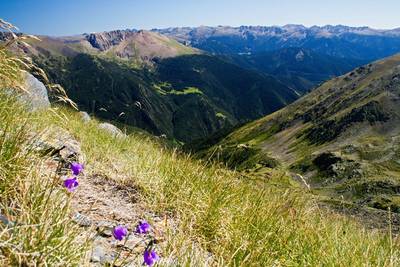
Pyrenees Alpine Scenic Drive
High mountain drive between Spain and France.
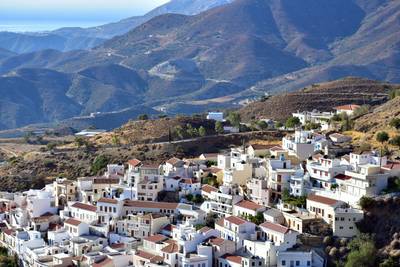
Andalusia White Villages Scenic Drive
Traditional white villages in southern Spain.
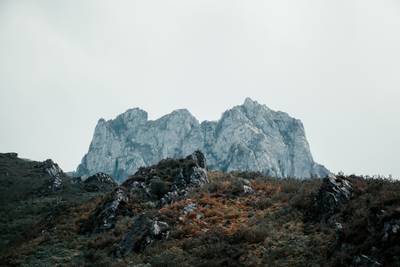
Picos de Europa Mountain Scenic Drive
Dramatic limestone peaks, deep gorges and mountain villages in northern Spain
Interesting facts about Spain
- The radial road system means six major highways originate from a single central point in Madrid to the coast.
- Ancient seasonal livestock migration routes, protected by law, dictate the paths of many rural secondary roads today.
- Extensive mountain terrain requires thousands of tunnels and viaducts to keep northern and southern regions connected by vehicle.
Why take a road trip in Spain?
Driving through Spain is one of the best ways to experience its landscapes. Many of the most beautiful places are not accessible by public transport, which makes road trips the most flexible and rewarding way to explore.
The real value is not just in destinations, but in the journey itself — long empty roads, unexpected viewpoints, and small stops that don’t appear in guidebooks.
FAQ about scenic driving in Spain
What is the best scenic drive in Spain?
It depends on the region, but mountain and coastal routes are usually the most popular.
When is the best time to visit?
Spring to early autumn is generally the best season for road trips.
Are these routes beginner-friendly?
Many routes are easy to drive, but mountain roads may require more attention.