Scenic Driving Routes in Germany
Germany combines excellent road infrastructure with scenic alpine routes, river valleys, forests, and historic regions. It is ideal for efficient and scenic travel. Drivers can explore the Bavarian Alps, Black Forest, Rhine Valley, and castle routes. The country offers strong variety within short distances. Germany is ideal for structured scenic road trips with both nature and culture.
Germany presents a highly organized driving landscape that transitions smoothly from flat Baltic coastlines down to northern glacial plains, rolling central highlands, and southern alpine ridges. Driving through this landscape relies on a deeply integrated road system that slices through dense pine forests, follows wide river cuts like the Rhine and Moselle, and scales high mountain borders. This layout creates an accessible road trip destination where motorists experience distinct shifts in regional terrain within a few hours of travel.
Map of scenic routes in Germany
Click on a route line to open its detailed page
Historical context of Germany
The decentralization of the Holy Roman Empire left a legacy of independent regional capitals, castles, and market towns, which modern roads now connect in close succession. In the twentieth century, the construction of the early Autobahn network established fast, long-distance corridors, while local transport development focused on maintaining older, secondary routes. The post-war division and eventual reunification of the country left distinct infrastructure signatures, particularly in the layout of transit corridors and the restoration of old border roads that now run through former frontier forests.
Geography of Germany
The terrain rises steadily from north to south, dictating how roads conform to the land. In the north, roads are straight and wide across flat plains, while the central uplands force routes to twist along narrow sandstone valleys and heavily forested ridges like the Harz. In the far south, the limestone peaks of the Alps create absolute barriers, requiring high-altitude passes and banked curves. Major river valleys serve as natural low-gradient channels where roads trace the water bends, flanked by steep slopes used for terraced agriculture.
Road conditions in Germany
The road system features an engineering contrast between high-capacity, multi-lane highways and narrow regional roads. Grade-separated Autobahns facilitate fast cross-country transit, while the federal and state roads feature smooth asphalt surfaces, clear lane markings, and standardized intersections. In hilly and mountainous areas, secondary roads become highly technical with frequent switchbacks, sharp elevation changes, and tight forest tunnels, though heavy investment ensures consistent infrastructure support, clear signage, and frequent rest points across all sixteen states.
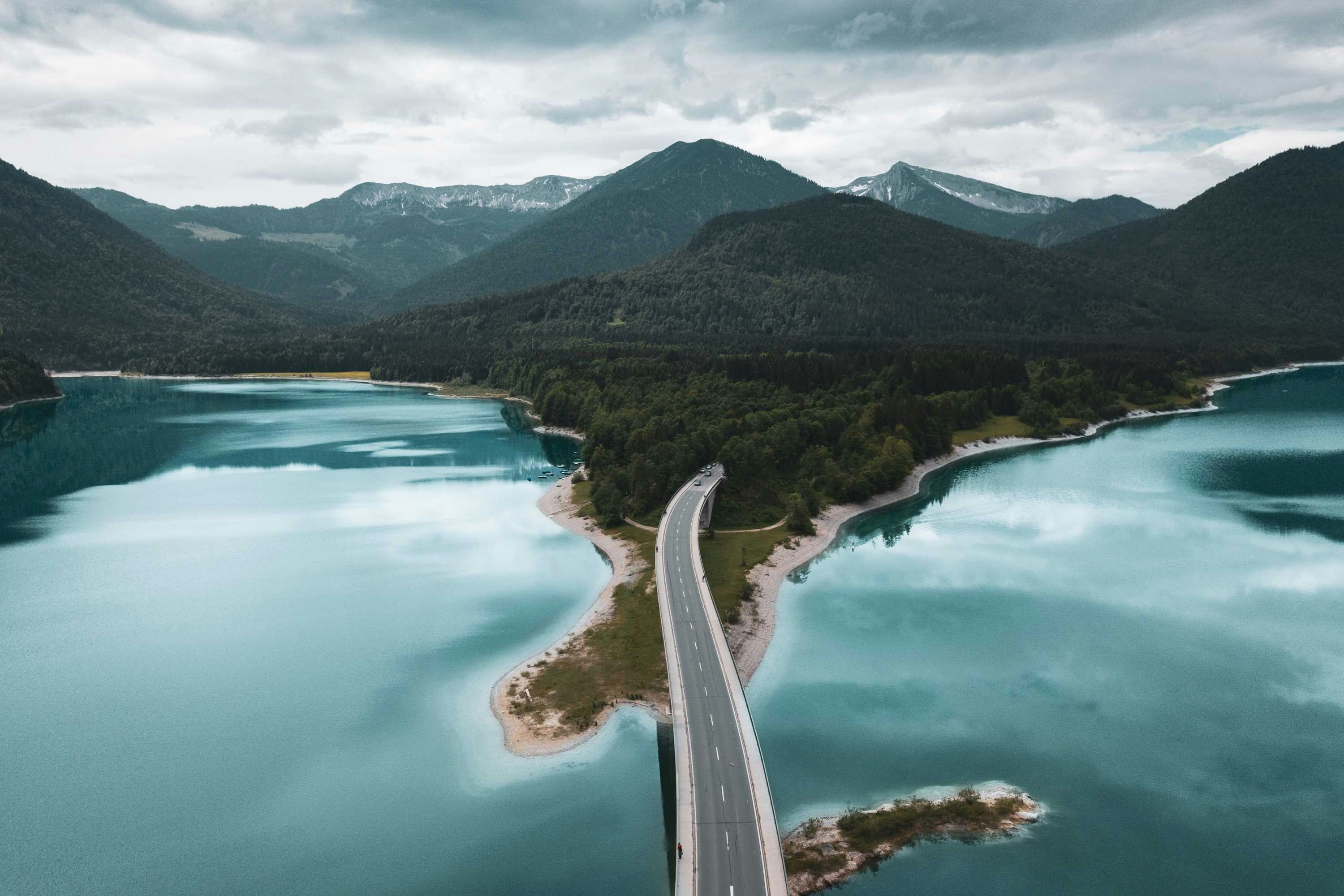
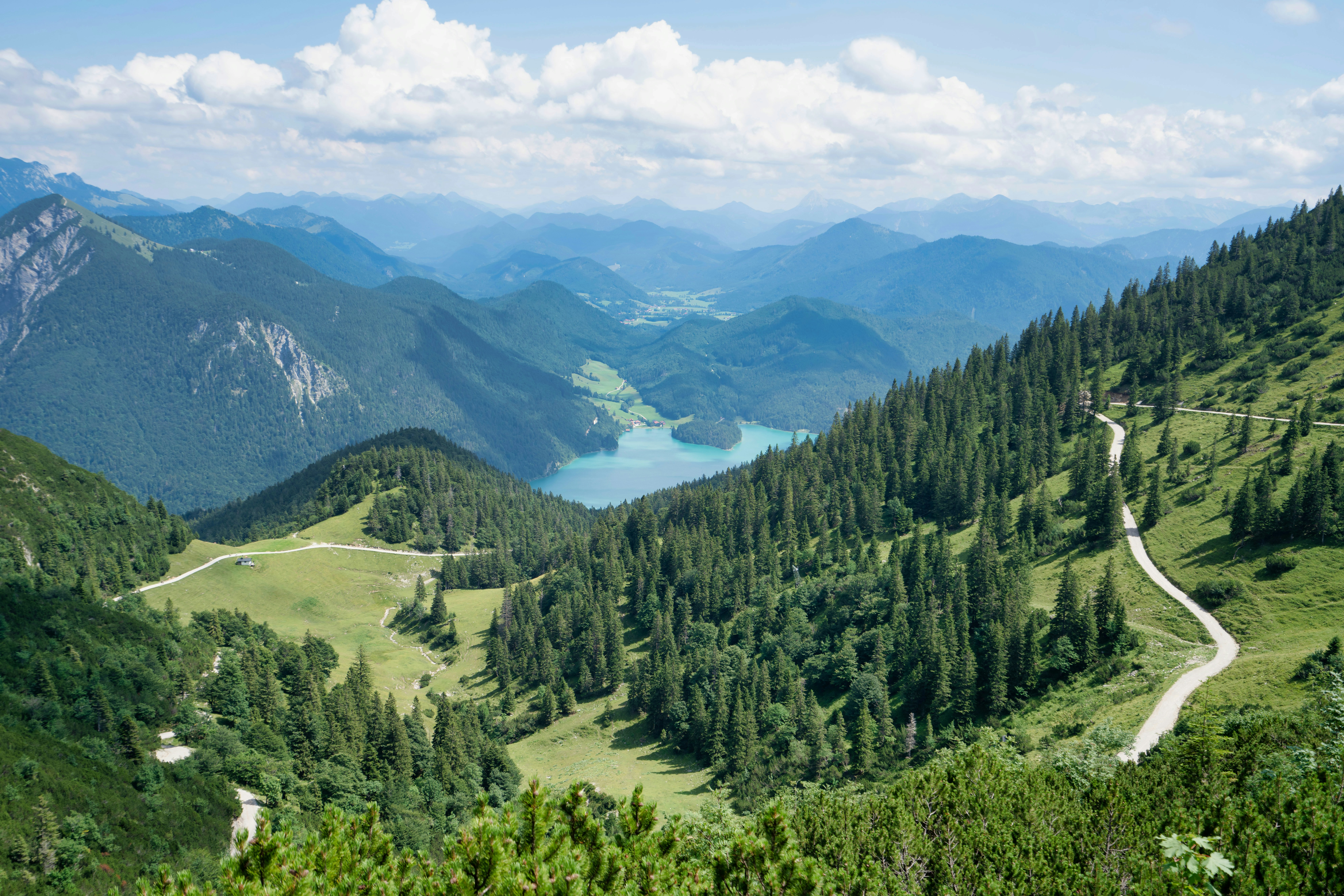
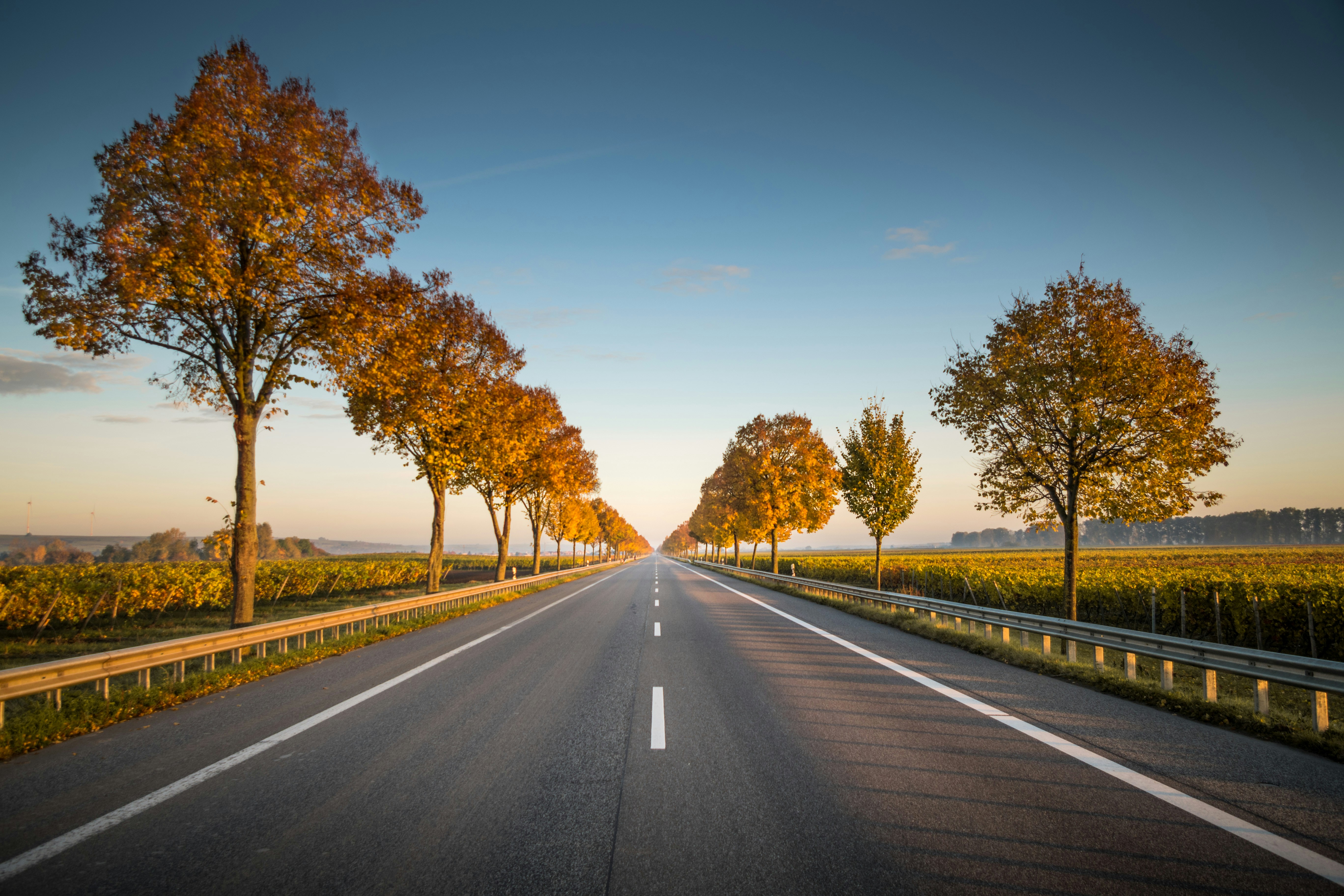
Scenic routes in Germany
Mixed scenic routes
Interesting facts about Germany
- The country has over one hundred officially designated themed tourist routes mapping specific regional histories and geographic features.
- Central uplands force secondary roads into dense, zigzagging curves originally cleared for medieval timber transport and border defense.
- Federal road design uses specific curve radii and banking angles to maintain steady vehicle momentum through hilly terrain.
Why take a road trip in Germany?
Driving through Germany is one of the best ways to experience its landscapes. Many of the most beautiful places are not accessible by public transport, which makes road trips the most flexible and rewarding way to explore.
The real value is not just in destinations, but in the journey itself — long empty roads, unexpected viewpoints, and small stops that don’t appear in guidebooks.
FAQ about scenic driving in Germany
What is the best scenic drive in Germany?
It depends on the region, but mountain and coastal routes are usually the most popular.
When is the best time to visit?
Spring to early autumn is generally the best season for road trips.
Are these routes beginner-friendly?
Many routes are easy to drive, but mountain roads may require more attention.